
Best overall
The best at-home IPL devices, and the safety spec to read first
Home IPL handsets ranked on published energy density, skin-tone sensing and located FDA clearance records.
Top pick: Braun Silk-expert Pro 5
IPL Hair Removal
Energy density varies by a factor of four across these devices, and the single most important safety variable is the one the advertising never leads with. Start with skin tone, then compare energy.
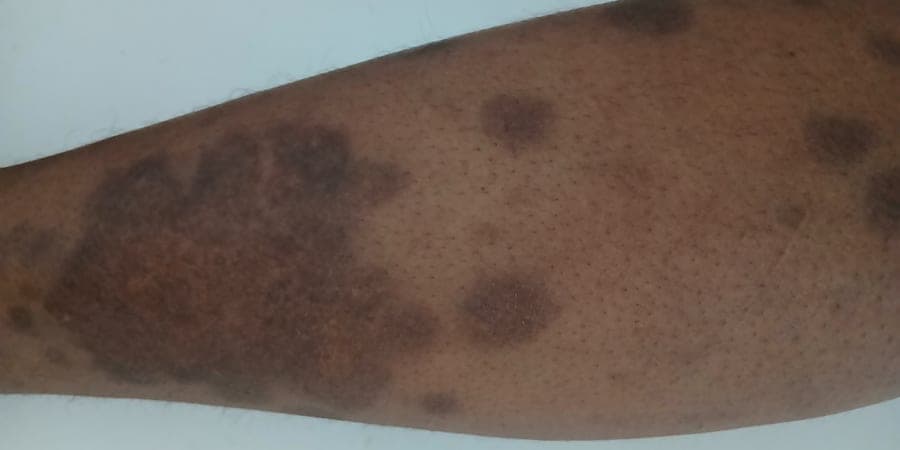
Intense pulsed light works by being absorbed preferentially by the melanin in a hair follicle, heating it enough to disrupt growth. That mechanism is also the whole safety story: the device cannot tell the difference between melanin in a hair and melanin in surrounding skin. It only works when there is a strong contrast between the two.
Safety first
Every home IPL device sold in the United States has a skin-tone ceiling, usually expressed against the Fitzpatrick scale. Above that ceiling the device is not merely less effective, it is a burn risk, because the surrounding skin absorbs the pulse instead of the follicle. Brands state this, but typically in a compatibility chart three clicks deep rather than on the box.
They are equally quiet about the other end. Very light blonde, red, white and gray hair contains too little melanin to absorb the pulse at all. No home IPL device works on it, at any energy level, on any skin tone. If that is your hair color, no device on this page will do what you want, and the honest answer is electrolysis.
This is the most important page on this site and it is not a product page. Read the skin tone safety guide first. Then come back and compare energy.
Output
Joules per square centimeter is the figure to compare, where it is published. The spread is enormous. Ulike states 23.6 J/cm2 for the Air 10. Braun states up to 6 J/cm2 for the Silk-expert Pro 5. Nood states 5 J/cm2 for The Flasher 2.0. Philips publishes no J/cm2 figure for the Lumea line at all.
A four-fold difference in stated energy does not mean four times the result, and higher is not automatically better: more energy means more heat at the skin surface, which is exactly why Ulike pairs its figure with sapphire contact cooling held near 16 to 18 degrees Celsius. Braun takes the opposite approach, running lower energy with a sensor that reads your skin eighty times a second and sets the intensity for you. Both are defensible designs. One asks you to tolerate heat for fewer sessions; the other asks you to accept more sessions for a gentler pulse.
Regulation
Home IPL hair removal sits under FDA product code OHT. The records here are in better shape than in the LED category.
Ulike's UI20 family, which includes the Air 10, is covered by K241998 (December 2024), with the UI20S variants under K250942 (July 2025). The Braun Silk-expert Pro 5 is K190354 and the Pro 3 is K190366, both cleared 18 March 2019 under applicant Cyden Limited. Philips Lumea holds current records K243453 (February 2025) and K253754 (December 2025). JOVS hand-held IPL devices hold K220645 and K214113.
Nood returns nothing. We searched the public database by brand and by device name and found no record for The Flasher 2.0, while some retail listings for it say "FDA approved", which is a phrase that does not apply to any device in this category. Cleared and approved are different things, and a retailer that confuses them is not a reassuring sign.
Practicalities
Start with the main roundup, or go straight to the best options for deeper skin tones if that is your question. It is the question most of this category answers badly.
Decide
Ranked picks with the spec table first, so the answer is on the first screen.
Best overall
Home IPL handsets ranked on published energy density, skin-tone sensing and located FDA clearance records.
Top pick: Braun Silk-expert Pro 5

Deeper skin tones
An honest account of IPL skin-tone limits, why they exist, which devices sense tone continuously, and what the alternatives are.
Top pick: Braun Silk-expert Pro 5
Best for facial hair
Devices with proper face attachments, the precautions that change above the jawline, and the areas no IPL device should go near.
Top pick: Philips Lumea IPL 9900 Series
Best for men
Which specs matter for coarse dense hair over large areas, plus the one practical problem of treating your own back.
Top pick: Ulike Air 10
Best for bikini line
What is in scope on the bikini line, what every manufacturer excludes, and which devices have attachments shaped for the area.
Top pick: Philips Lumea IPL 9900 Series
Compare
Two devices, the specification that separates them, and a verdict.

Brand-level comparison of the two dominant approaches: energy plus cooling against sensor-enforced low energy.
Top pick: Braun Silk-expert Pro 5

The flagship model-vs-model: energy, cooling, flash rate, sensors and clearance records, with a clear recommendation.
Top pick: Braun Silk-expert Pro 5
Three-way comparison on energy, cooling and clearance records, including the one brand that returns nothing from the FDA database.
Top pick: Braun Silk-expert Pro 5
Three intensity levels against ten, both with SensoAdapt, both cleared 18 March 2019 under Cyden Limited.
Top pick: Braun Silk-expert Pro 5
Broad spectrum against single wavelength: what each can treat, who can use each, and when the clinic is the honest answer.
Top pick: Braun Silk-expert Pro 5
Why electrolysis works where IPL cannot, what permanent actually means, and who should choose it.
Top pick: Braun Silk-expert Pro 5
In depth
One device at a time: who it suits, and who should skip it.
23.6 J/cm2 brand-stated, sapphire cooling near 16-18 C, a million flashes and two located clearances.
Top pick: Ulike Air 10
SkinPro 2.0 reading skin 80 times a second, 125 flashes a minute, clearance K190354 - and a deliberately modest energy figure.
Top pick: Braun Silk-expert Pro 5
Four area-specific attachments, published per-area treatment times, two current clearances, and no published energy figure.
Top pick: Philips Lumea IPL 9900 Series
A published 510-1200 nm spectrum, 5 J/cm2, no cooling, and no 510(k) record we could locate.
Top pick: Nood The Flasher 2.0
Gifting
For the person buying this for somebody else, who does not share their vocabulary.
Best gift picks
The one device category where a gift can go genuinely wrong, with the checks to make and the safer alternatives.
Top pick: Braun Silk-expert Pro 5
Understand
The spec vocabulary, the regulations and the safety limits, explained once properly.
The physics behind IPL's skin-tone ceiling, where devices stop, how to patch test properly, and the alternatives with no limit.
Why IPL protocols are weekly, what the growth cycle has to do with it, and what maintenance actually involves.
What J/cm2 measures, what it omits, how spectrum and pulse duration change the picture, and why higher is not always better.
FAQ
Sources
Elsewhere on the site
Six brands dominate this category and four of them publish almost nothing you can check. Here is what each one actually emits, which clearance numbers exist, and which specification is missing from every single spec sheet.
One brand in this category publishes its actual microamp output. The rest ask you to take the word mode seriously. Here is what each device is cleared for, what it puts out, and where the gaps are.
Not sure which modality you need? Read how we evaluate devices.